For this edition of our Concacaf stadium tour we head down to central Mexico, to the city of Toluca. Toluca's most famous ground is the Estadio Nemesio Diéz, which has been home to the city's main club since 1954, and while it's an impressive stadium that has even made its way into that weird Geico ad, it is not the subject of today's tour.
We are headed to the city's lesser known stadium, the Estadio Universitario Alberto "Chivo" Córdoba. The 32,000 capacity venue actually makes it the largest in the city, but its main tenants, the UAEM Potros, rarely if ever fill it up. The Potros have bounced around the lower divisions of Mexican football since their formation in 1970, but never reached the top flight. They currently sit in the 4th tier of the pyramid, and with the uncertainty surrounding Mexican pro/rel they may never climb higher than that again.
Although the Potros may not be the biggest draw in the world, Mexican soccer fans are still probably familiar with the Universitario due to its use as a temporary home for Toluca in 2016 while the Nemesio Díez underwent renovations. It only takes one glance at the western stands for the place to grab your attention:
The gigantic coliseum style concrete seating is a sight to behold on its own, but the mural that covers the grandstand is what makes the Universitario one of the most beautiful stadiums on Earth. The mural, created by famous artist Leopoldo Flores, was added to the stadium in the mid-1970s, about a decade after the stands were first constructed. Flores called the abstract depiction of a person grabbing the sunlight from the sky the Aratmósfera. I do not have an eye for high art, but I think it's impressive how the mural remains so captivating even though I struggle to see anything other than a splash of colors and shapes.
In addition to the mural, overlooking the stadium high atop a painted cliff that acts as an extension of the Aratmósfera itself, is a gigantic statue of the head of former Mexican president Adolfo López Mateos. The mural is among the most beautiful backdrops you'll ever see in a football stadium; the president's gigantic head is among the most unique.
From up on the cliff you get a fantastic view of not only the stadium, but the entire city. The view is nice on google maps, but certainly this is an overlook worth seeing for yourself.
Sadly, unless Toluca ever returns to the stadium it is unlikely we'll ever see it full again; with only the Potros playing there regularly it may be tough to catch a game with a lively atmosphere. But that shouldn't stop you from seeing the ground altogether. If you ever find yourself in Toluca, the Universitario is a must-visit.
Saturday, July 18, 2020
Sunday, July 12, 2020
Concacaf Stadium Series Episode #1: Canada
Hello Concacaf fans! Hope you are all staying safe and healthy! It sure has been a while since I posted here. Unfortunately, the current state of the region has left us without all that much soccer to watch, though of course Costa Rica managed to sneak in the end of their season and other leagues are beginning to trickle back in. So perhaps there will be some "regular" content to talk about in the near-ish future, but for now I want to introduce a new series of sorts to Concacaf Lives!
What I have cleverly titled the Concacaf Stadium Series will be a series of brief looks at some of the more interesting venues around the region. There are some absolutely tremendous grounds to look at, and since we are not going to be traveling or attending matches for the time being, I wanted to take you all on a virtual soccer pilgrimage. Perhaps, when this is all over, some of you will be inspired to visit these places on a real soccer pilgrimage. For now though, enjoy the images and Google StreetView links when applicable.
Our first stop will be in Concacaf's largest member nation: Canada. While known much more for its ice hockey, there are some beautiful pitches dotted across the northern lands. Canada will of course be co-hosting the 2026 World Cup, and just hosted the 2015 Women's World Cup, and the country's biggest soccer venues, many of which double as homes for CFL teams, are pretty well known.
And perhaps none moreso than the Olympic Stadium in Montreal. Originally built for the 1976 Olympics, the stadium is the current part-time home of the Montreal Impact, who use the building exclusively for their biggest games. The iconic 2015 Concacaf Champions League final, in which Dario Benedetto netted a soul-crushing hat trick for América to deny Impact fans the ultimate prize, took place inside the Big O.
In the upper reaches of the country, soccer pitches become increasingly rare. It's just too cold. But Shell Place in Fort McMurray, Alberta, acts as one of the game's northern outposts in the country. The venue hosted FC Edmonton for two special games during the 2015 NASL season, making it, to my knowledge, the northernmost venue to host professional soccer in Concacaf. Seriously, look at Fort McMurray on a map, it is waaaaaay the heck up there.
You can actually find one of those FC Edmonton matches in full here, which can give you a pretty good feel for the stadium.
At the very Western tip of Vancouver, where the land meets the Strait of Georgia, lies the campus of the University of British Columbia and Thunderbird Stadium. The main tenants are various teams of the UBC Thunderbirds, for which the stadium is named, but the Whitecaps reserves used to play here when they fielded a USL team from 2015-2017.
I'm sure the gridiron football lines are upsetting to a lot of people, but I have always liked the cozy look of the single grandstand. It's so neatly tucked into the surroundings.
Our final stop takes us near the Arctic Circle, to Iqaluit, the capital of Nunavut. As far North as Shell Place was, it has nothing on the Artic Winter Games Arena. The turf field inside the complex, which hosts local adult and youth leagues, is a testament to the sport's ability to survive in any conditions. Even here in a remote community of just over 7,000, where the temperature is rarely warm enough for an outdoor game, players of all ages take to the pitch each week.
The arena itself is nothing too out of the ordinary for an indoor field, but indoor pitches don't get enough love as it is and it's cool to see the game being played up here. It really speaks to the universality of soccer. You can explore pretty much the whole arena on StreetView, albeit with ice installed over the turf. Just walk right through the front door and take a peek!

What I have cleverly titled the Concacaf Stadium Series will be a series of brief looks at some of the more interesting venues around the region. There are some absolutely tremendous grounds to look at, and since we are not going to be traveling or attending matches for the time being, I wanted to take you all on a virtual soccer pilgrimage. Perhaps, when this is all over, some of you will be inspired to visit these places on a real soccer pilgrimage. For now though, enjoy the images and Google StreetView links when applicable.
Our first stop will be in Concacaf's largest member nation: Canada. While known much more for its ice hockey, there are some beautiful pitches dotted across the northern lands. Canada will of course be co-hosting the 2026 World Cup, and just hosted the 2015 Women's World Cup, and the country's biggest soccer venues, many of which double as homes for CFL teams, are pretty well known.
And perhaps none moreso than the Olympic Stadium in Montreal. Originally built for the 1976 Olympics, the stadium is the current part-time home of the Montreal Impact, who use the building exclusively for their biggest games. The iconic 2015 Concacaf Champions League final, in which Dario Benedetto netted a soul-crushing hat trick for América to deny Impact fans the ultimate prize, took place inside the Big O.
In the upper reaches of the country, soccer pitches become increasingly rare. It's just too cold. But Shell Place in Fort McMurray, Alberta, acts as one of the game's northern outposts in the country. The venue hosted FC Edmonton for two special games during the 2015 NASL season, making it, to my knowledge, the northernmost venue to host professional soccer in Concacaf. Seriously, look at Fort McMurray on a map, it is waaaaaay the heck up there.
You can actually find one of those FC Edmonton matches in full here, which can give you a pretty good feel for the stadium.
At the very Western tip of Vancouver, where the land meets the Strait of Georgia, lies the campus of the University of British Columbia and Thunderbird Stadium. The main tenants are various teams of the UBC Thunderbirds, for which the stadium is named, but the Whitecaps reserves used to play here when they fielded a USL team from 2015-2017.I'm sure the gridiron football lines are upsetting to a lot of people, but I have always liked the cozy look of the single grandstand. It's so neatly tucked into the surroundings.
Our final stop takes us near the Arctic Circle, to Iqaluit, the capital of Nunavut. As far North as Shell Place was, it has nothing on the Artic Winter Games Arena. The turf field inside the complex, which hosts local adult and youth leagues, is a testament to the sport's ability to survive in any conditions. Even here in a remote community of just over 7,000, where the temperature is rarely warm enough for an outdoor game, players of all ages take to the pitch each week.
The arena itself is nothing too out of the ordinary for an indoor field, but indoor pitches don't get enough love as it is and it's cool to see the game being played up here. It really speaks to the universality of soccer. You can explore pretty much the whole arena on StreetView, albeit with ice installed over the turf. Just walk right through the front door and take a peek!

Wednesday, May 13, 2020
The Hawaii Tsunami: American Soccer's Best Kept Secret
As a blog that mostly focuses on the lesser covered nations in the Concacaf region, the United States is not a place I get to talk about too often. As MLS continues to grow in size and in popularity, it's sometimes easy to forget that the US has its own bottomless supply of interesting teams and stories to tell. The USL Championship today has 36 teams, and it's 2nd Division adds another 12. The third tier, which was formerly called the PDL, has about another 80. There's a lot of history there that is seldom spoken about.
And while the USL divisions today are beginning to stabilize (and hopefully will remain stable through the current crisis), lots of minor league clubs pop up and fold as quickly as they appeared. So often while surfing Wikipedia I see the names of teams I wish I could know more about: The Jackson Chargers from Mississippi, the New Orleans Riverboat Gamblers, and countless others.
But the one team that had always stuck out to me more than any other was the Hawaii Tsunami, a professional team based in Honolulu that played four seasons in the USISL from 1994 to 1997. For the unitiated, that's the United States Interregional Soccer League, and also the United States International Soccer League, and also the United Systems of Independent Soccer Leagues. They loved changing the name but keeping the acronym. Eventually it became the United Soccer Leagues (USL), and now finally has settled on the singular United Soccer League.
![]() |
| "Hottest League/Coolest Teams" |
The Tsunami were the second professional soccer team on the islands, after a failed attempt at a franchise during the 1977 NASL season. They played four seasons and had one great year in 1995; reaching the Sizzlin' Nine (yes, that's really the name) playoffs and bowing out in group play. And, without some digging, that is nearly all you'll ever find out about them online. No pictures, no club logo, almost absolutely nothing.
So of course, I did some digging. I found some interesting articles. I read a book on Hawaiian sports history. I even tracked down David Trifonovitch, a former player and coach for the Tsunami who was kind enough to answer all of my questions. Here's my expanded history of the Hawaii Tsunami, America's forgotten club:
The club joined the USISL for the 1994 season with a side consisting entirely of local players and coaches. With a limited talent pool compared to the mainland clubs and a grueling travel schedule that prevented the team from ever truly being at full strength away from the islands, things were tough. The team went 3-15, finishing 8th out of 10 teams in the USISL's Pacific Division. It wasn't a great start, but the season laid the foundation for greater things to come.
Before the 1995 season, the USISL split its outdoor season into two leagues: The Pro League and the Premier League. The Pro League was, naturally, for professionals, while the Premier League was for amateurs and college kids during their summer offseason. The Tsunami were placed in the professional division, but there weren't many pros on the team. The meager salaries offered in 1994 were mostly returned by the players to help fund the 1995 season, and most of the budget during the club's second year was invested in coaching.
Enter Andrew Rowley, a man who was well-connected in the soccer world of Central California, and was brought across the Pacific to guide the 1995 Tsunami through the newly formed Northwest Division. If it sounds like spending most of your money on a coach rather than players sounds like a bad idea, think again. One of Rowley's first moves was to recruit veteran goalkeeper and Bay Area friend Mark Dougherty, who was waiting for MLS to start up in 1996 and had one season to fill. Dougherty would go on to be the 7th overall pick in the inaugural MLS draft and was by all accounts one of the best goalies in the country at the time.
Dougherty was brought on board as a player/coach, and he and Rowley successfully recruited numerous other top players who were waiting for MLS, including forwards Billy Thompson and Peter Woodring, who both had European experience and would go on to play for the USMNT. They also landed Samuel Ekemé, who played for Cameroon at the 1994 World Cup, and Victor N'Dip Akem, who played for Cameroon at both the 1990 and 1994 World Cups.
Suddenly, the team of Hawaiian locals was now packed with international stars, and the results on the pitch were what you would expect. The Tsunami finished the 1995 season comfortably in first place in the Northwest Division, going 18-2 with a +54 goal differential. They were a perfect 10-0 at home during the regular season, and improved to 11-0 with a 2-0 win at Aloha Stadium in the divisional final against the Salem Surge.
The Tsunami played games at venues around Oahu, and on occasion on other islands such as Kauai, with many matches taking place at high school stadiums. But when possible, the club played at the 50,000 seat Aloha Stadium, arguably the nicest venue in the league. But that alone wasn't the only reason the club enjoyed a home field advantage: while road trips were grueling for the Tsunami, trips to the islands for other teams were naturally just as difficult.
In addition to the long flight, the conditions of Hawaii proved challenging for the outsiders. Mark Dougherty once suggested that the team's opponents, who routinely showed up sunburned, couldn't resist goofing off at the beach before games instead of preparing. Hawaii native David Trifonovitch says while he doesn't know for sure that the opposition were out at the beach, even a day of practicing in the Hawaiian sun would be enough to leave most visitors burned and exhausted.
This dominant home form coupled with near equal dominance on the mainland saw the Tsunami qualify for the Sizzlin' Nine, the national stage of the USISL playoffs. Here the Tsunami dropped both games in group play, the first on penalties to the hometown New York Fever, and the second 2-0 to the eventual runners-up Minnesota Thunder. Though they didn't capture a national title, the team was well recognized for their efforts. Rowley won the Northwest Coach of the Year Award, while Billy Thompson was named Offensive MVP. Ekemé won Defensive Player of the Year. Dougherty and midfielder Sterling Wescott were also named to the All-Northwest XI.
All four players, as well as Woodring and midfielder Josh McKay, would go straight to MLS in 1996. Trifonovitch, one of the club's biggest local stars, retired to focus on coaching at the high school level. Jerry Proctor, another local star from Pearl City, returned for a third year.
In 1996, the USISL reformatted its leagues again, creating the Select League, which was one tier above the Pro League. The Tsunami stayed put in the USISL Pro League, which thanks to the addition of MLS and the Select League, was now the third tier of American soccer. Thus, despite the mass exodus of the team's best players, the club was still able to hold its own.
The quality of the league had dropped, and this time around when the Tsunami fielded a mostly local team they found themselves quite up to the challenge, going 10-6 en route to a first place finish in the Western Conference. Proctor lead the team with 7 goals and 7 assists. Luis Orellana had a team high 9 goals.
After a sluggish start, the team won 7 of their final 8 matches to lock up a home playoff game for the second consecutive year. This time around, playing at Cooke Field on the campus of the University of Hawaii rather than Aloha Stadium, they were eliminated in the first round by the Everett Bigfoot. It would be the final playoff game in Tsunami history.
The 1997 season saw the departure of Rowley and the return of Trifonovitch, this time as head coach. The league had once again been renamed, this time as the USISL D-3 Pro League, and the Tsunami set out for a third straight regular season title. But the team would finish just 5-11, as financial troubles continued to mount and the league itself went through a rough stretch as it continued to lose top players to MLS. Trifonovitch said of the '97 season:
And sadly, that is where the story ends, with the Tsunami folding after the 1997 season. In just four years the franchise had gone through some tremendous ups and downs, and had successfully launched the careers of many future MLS players. Exact roster data for each year is not available, so it is difficult to track down exactly who played for the Tsunami and when, but it is likely that a handful of others not mentioned here eventually found their way to MLS or a different top flight for a cup of coffee at some point.
Oh, and how could I not talk about the jerseys? These are some serious heat! A simple design but that blue and white color scheme is oh so good.
As I mentioned above, David was able to answer a TON of questions for me, some of which don't neatly fit into the narrative of the story. He also kindly provided all of the images used in this post. For more info on the nitty-gritty details of the Tsunami and soccer in Hawaii in general, here is the rest of the interview:
Tim: How many years were you part of the Tsunami as a player, and how many as a coach? Were you ever both at the same time?
David: I was part of the team for three out of four years. I played on the team the first two years. Quit playing for them the third year and then was hired to be the coach for the 4th year.
Tim: How popular is soccer in Hawaii in general? Do you think the Tsunami helped grow the game around the state or was the passion already there?
David: Soccer is the number one participation sport for kids in the state of Hawaii. The love for the game was in a great growth period during the Tsunami years and I think the Tsunami definitely helped fuel the passion for the game.
Tim: Even though there’s no more pro soccer in Hawaii, you’re still very involved in the game today. What exactly are you doing now?
David: I am the Director of Coaching for a club called FC Hawaii, I am the vice chairman of the board for the Oahu League, which is the largest youth soccer league in the state affiliated with USYSA, and I am also on the Hawaii Youth Soccer Association (HYSA) board and head varsity boys coach and program director at Punahou School.
Tim: How was the travel for the Tsunami? Were there some players who couldn’t make the away dates and only played at home?
David: We were sponsored by Hawaiian Airlines, and it was always a pleasure to travel with them. We would leave on a Thursday, play games Friday and Sunday and return on Mondays. It wasn’t very easy due to the time difference of three hours between the islands and the west coast, but we knew it was something we couldn’t use as an excuse. All the players in the first year worked other jobs either full or part time, so some, who couldn’t get away with missing 3 days of work, would have to pick and choose what trips they could make. I think everyone on the team made at least one road trip.
Tim: What was the media coverage of the time like? Were any matches/interviews broadcast on TV or radio or was it just newspapers?
David: The media did a pretty good job. We were mostly covered through the local papers but sometimes got TV sports news interviews. They would sometimes send a cameraman to the games to get some highlights for the late evening and next-day sports news.
Tim: So if there was a little media coverage around the league was there any sort of scouting your opponents beforehand or was it basically flying blind until the second and third time you played them?
David: The first year was completely blind. We had no idea who we were playing and being it was an all local team with local coaches, there was no information on our opponents. The second year, Andrew and Mark had contacts and friends within the league that gave us some information on teams and players to watch for. In the 4th year when I was coaching, we were pretty much blind again. I could only rely on information from some of the mainland players that were playing with us to tell me about friends on other teams.
Tuesday, May 12, 2020
Costa Rican League Set to Return, and it's Okay to Watch
Rejoice, futbol fans, because finally after a very long hiatus (though time moves awfully quick these days) there will be some exciting matches played very soon in the Concacaf region. The Costa Rican government and Ministry of Health have given the green light to restart the Liga FPD on May 20th. There are seven weeks of regular season play left, with the top four teams in the twelve-team league making the playoffs. The matchdays have been condensed so that the regular season may finish on June 10th, with the playoffs running until June 24th, or July 1st, if a Gran Final is required. You can watch the league's full press conference (in Spanish) here.
Simply put, it is exciting to see the return of one of Concacaf's highest quality and most fun leagues. For those unfamiliar with the Liga FPD: it absolutely slaps. The top 3 sides, Alajuelense, Herediano, and Saprissa all have the look of Central American all-star teams and consistently play at a very high level, though Ala are just coming out of a stretch of a few rough seasons. Newly promoted Jicaral are currently holding down the 4th and final playoff spot, and should they qualify it would be the second consecutive Clausura in which the league's only newly promoted team reached the playoffs; San Carlos won the whole thing one year ago in their first year back in the top flight after a stint in the Liga de Ascenso.
Jornada 16 will be headlined by league leaders Saprissa hosting 3rd placed Herediano with an awful lot to play for. The league format mandates that if the #1 seed fails to win the playoffs, they get a second chance via a home-and-away series with the playoff champion. Thus, Saprissa will not be sitting on their comfortable playoff position but rather pushing for a win to help lock up that 1st place finish.
But of course, you may be, and in fact you probably are, reading this and thinking that this all just doesn't seem right. Sports around the world are coming back far too soon. This feeling of guilt has become very normal for us, who all very much want to see the return of the games we love but also know they aren't worth risking the safety of the people involved. This feeling completely tainted the delightful finish to the Nicaraguan League last month, which played straight through the pandemic despite disapproval from many players and turned the rest of the season into an uncomfortable mess.
And as the Bundesliga, Premier League, and Major American Leagues begin to roll out dates for their returns that seem far too good to be true or safe, the feeling persists. Back on April 11th I started watching Taiwanese baseball, and the Rakuten Monkeys have provided some much-needed guilt-free sporting stability in my life. Taiwan has handled the crisis with aplomb so far, and the league feels very safe. So safe, in fact, that they've started letting fans back into the seats so long as they remain socially distanced. Other people have started following the KBO, South Korea's baseball league which started its season last week. And K-League Football resumed last weekend too, as Korea continues to minimize cases even as a second cluster sprung up a few days ago.
I say all of this to say that there are some guilt-free sports to watch out there, even if eSports or Marbula 1 aren't your thing. And I'm happy to say that the Liga FPD can be added to that list. Costa Rica's renowned healthcare system, contact tracing, and diligence in battling the virus have proven to be very effective, and the country has had just a touch over 800 cases total. Of course, the population of Costa Rica (5 million) is much smaller than that of Germany or England, who both are looking to resume their leagues in a similar time frame, but it's still a very low and very encouraging number. The cases have plateaued at about a dozen a day. I am no epidemiologist and you shouldn't take your pandemic advice from me, but if you do some homework on the subject you're going to read a lot of praise for Costa Rica's success and little evidence to contradict it.
With matches scheduled to be played behind closed doors and all players and team staff adhering to safety precautions when traveling, I think it is fair to say that (for now) it is safe for the league to return and it is perfectly okay to enjoy the final weeks of the playoff chase (and tense relegation battle! Vamos UCR!). Of course, with this virus, cases could rise in Costa Rica over the next month and things could get icky again, but for now we can all take a sweet dose of football medicine for our ailing minds. Stay safe out there, everyone.
Monday, February 17, 2020
Joe Public vs New England: Revisiting a CCL Classic
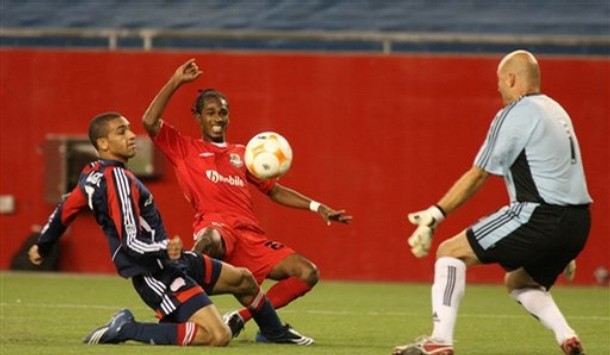
But there is one series that defies all logic. It is, in a good way, the most Concacafy of all CCL ties. To find it, we must go back to August of 2008, to the very first round in CCL history. Today we revisit what is for my money the most astounding, jaw dropping scoreline we have ever seen and ever will see: New England Revolution 0, Joe Public FC 4.
The 2-1 home victory for Joe Public in the first leg maybe wasn’t the biggest shock in the world, but it was still a surprise to say the least. Later on in the tournament Joe Public would lose all three of their home group matches, including a 4-1 defeat to the then USL based Montreal Impact. Teams from Trinidad and Tobago were not supposed to be beating MLS sides, and in fact in Joe Public’s previous CONCACAF outings they had lost 8-0 to DC United, 2-0 to the Chicago Fire, and a respectable 1-0 to Pachuca, all in the first round. The home leg against New England was Joe Public’s first ever win in CONCACAF’s top competition, period.
But it is the second leg of this series that really deserves attention. What a great game for CONCACAF lore. It was the first round of the Champions League era. Mark Geiger was the 4th official. Gillette Stadium, an NFL venue, was packed with roughly 3,000 fans and 60,000 empty seats. And Joe Public FC, who at the time sat in 6th place in the TT Pro League, demolished the New England Revolution 4-0. It was ugly.
The hero of the day was Guyanese striker Gregory Richardson, who notched a hat trick and added the assist on the other goal to launch himself into the history books. Richardson’s legendary performance in this match eventually earned him a contract with the Colorado Rapids a year later. He would play just 11 minutes in his MLS career, quickly moving to the US lower divisions and then back home to his native Guyana in 2013. Richardson still plays in the Guyanese League at the age of 37, and even got onto the national team roster in 2019 for the Nations League, though he hasn't seen the field for them in a few years.
Now your first thought upon reading all this might be: “Okay, it was 2008, New England probably didn’t care about this competition and played a bunch of 19 year olds.” But if you take a look at the starting XI that day, that simply wasn’t the case. Yes, New England were without their starting forwards including Taylor Twellman, but fill-in Khano Smith started 26 games for the Revs a year prior, and had 18 starts in 2008. He was by no means a reserve player.
Regardless of the situation up top, the back line for the Revs that day, the one responsible for giving up four goals at home, was loaded with talent. Jay Heaps and Christian Tierney played 240 games each for the Revolution and were perennial starters for a decade. Jeff Larentowicz played 111 games with New England and is still a productive MLS player over twelve years later. Gabriel Badilla (Rest in Peace) earned 25 caps for Costa Rica.
Furthermore goalkeeper Matt Reis was the Revs starter for 10 years, and defensive midfielder Shalrie Joseph, who captained New England that day, played over 260 games for the Revolution and was named to the MLS Best XI four times, including during 2008. Along with Twellman, he’s debatably the best player in the club’s history.
There is really not much of a case to be made that Joe Public defeated a phony lineup in Foxborough. A similar squad defeated Atlante in the Superliga just a month prior to the Joe Public series. Atlante, of course, would go on to win the first CONCACAF Champions League while the Revolution were embarrassed.
This upset is so absurd that it doesn't even give me hope for more in the future. It was such a rare occurrence that I cannot fathom ever happening again. There is just one Caribbean team in the 2020 CCL, Jamaica's Portmore United. Most people would be surprised if they keep it within four goals against Cruz Azul; winning by four goals on the road is not even a possibility. This game is special to look back on because I truly don't think it will EVER happen again.
Wednesday, February 12, 2020
What Will it Take for Saprissa to Win the CCL?
Every year when the Concacaf Champions Leauge rolls around, the discussion is the same. Liga MX teams are the favorites, but can an MLS side break through and raise the trophy? It's a valid discussion, but also one you can find elsewhere on the internet, so instead I ask a different question. What will it take for a Central American team to win it all?
It may not be as impossible as it sounds. In fact, two Costa Rican teams have won the regional crown more recently than an MLS team, but of course that was all before the tournament was rebranded and reformatted as the Champions League. But even still, a lot of sides from outside the continent's "Big Two" leagues remain dangerous and relevant. In 2015 both Herediano and Alajuelense reached the semis, and for a brief moment it looked as though we were headed for an all-Costa Rican final.
It has become a bit of a Concacaf cliche to dub Saprissa as the best team in Central America before the CCL starts up; though they’re always near the top of the heap, we’ve seen the last few years they haven’t quite been the beast so many of us have made them out to be. In 2020 however, I think El Monstruo will live up to the hype. They come into the tournament with a talented squad including evergreen Concacaf boss Marvin Angulo and proven veteran goalscorer Johan Venegas. They've also got a growing star in Manfred Ugalde, and a favorable draw means they won't have to play a Liga MX team until the semifinals at minimum.
Saprissa just won the 2019 Concacaf League, playing through five grueling rounds of away trips that provide invaluable experience for a CCL run. The Champions League is all about the intangibles, and I cannot stress enough how useful the Concacaf League was for developing this team. Moments like the epic comeback against Olimpia and even having a bit of trouble against the Belmopan Bandits mentally prepare the team for the difficult matches to come and instill the confidence and mentality that they can climb out of those dire situations. And as I’ve said a million times at this point, on the logistical side, the club having just had a dress rehearsal where they booked flights, accommodations, etc. five times will help prevent any off the field nonsense from hurting their chances.
Earlier in the week I noted one of Tigres’ biggest advantages this year is a draw that sees them isolated from the rest of the Liga MX sides; Saprissa (and Honduran side Olimpia, who have the 2nd best odds from Central America this year) have that same benefit.
Saprissa have the Montreal Impact in the first round in a series where they are just straight up the favorites. The Impact have a CCL pedigree, having made the final back in 2015 and gotten awfully close to winning it, but they also were the 18th best team in MLS a year ago and are now without Ignacio Piatti. Saprissa will be in form and are a better team right now. Montreal is by no means a walk-over and the Canadians will also be looking at the bracket and licking their lips at a very makeable passage to the final, but I like Saprissa’s chances.
Now of course, to win the whole tournament you need more than an easy first round draw. Saprissa can’t expect to not have to upset a few teams along the way, but let’s look at the bigger picture here. Saprissa’s home record is outrageous. In fact, all Costa Rican clubs have an outrageous home record in the CCL (the last five MLS teams to travel to Costa Rica have all lost by at least 2 goals), but Saprissa even moreso.
El Monstruo Morado was a perfect 5 wins in 5 home matches in the Concacaf League title run. They even defeated Tigres 1-0 at home last year, though they came out flat in the second leg and went down without much of a fight. Even if they are the underdogs against Seattle, Tigres, or whoever comes after that, they’re almost always going to get a good result at home, reducing the 2nd leg to a very manageable game.
Let’s play the hypothetical game for a moment to visualize the odds: Montreal they should beat, then they have roughly a 25% chance of getting Olimpia (who they should also beat), or more likely an encounter with Seattle where I’d have them as underdogs by the slimmest of margins. Perfectly doable so far. Independiente a year ago had a very similar road and nearly qualified to the semifinals.
The final four is where it gets tricky. Most likely you’re getting Tigres, who did manhandle Saprissa a year ago at El Volcan. But as I said they did win the home leg a year ago, and their Liga FPD rivals Herediano gave Tigres a tough time three years in a row before that. If they get all the way to the final they’d again have another difficult series with most likely a Liga MX team, but at that point the momentum would be through the roof and I think you’d see a very inspired Saprissa side in that series.
Maybe you read that and said, “you know, that is reasonable.” Or maybe you read it and said “that’s exactly why they’ll never win.” And I think it’s fine to believe either way; it’s all a matter of perspective. If you firmly believe this is a Liga MX tournament, I’m not going to argue with you and neither are the results. But if you think this is a tournament that MLS teams can conceivably win (as I do), then I think you need to recognize Saprissa’s chances as well.
The hypothetical odds game sounds like a convoluted mess (and it is), but I can assure you that every MLS team’s hypothetical is equally convoluted. All LAFC has to do is beat 4 Liga MX teams in a row. NYCFC cannot play their matches at Yankee Stadium and has to deal with Tigres. Atlanta is getting thrown against the best team on the continent in the second round. These teams winning is *also* unlikely, and I think it’s important to shake off any biases you may have against the smaller leagues of the region and recognize that the best Central American teams, Saprissa this year, Independiente a year ago, Herediano and Alajuelense in 2015, have as good a chance as anyone outside Liga MX.
Monday, February 3, 2020
CCL 2020: Tigres' Last Chance?
It is almost time again for the most wonderful and blessed of all tournaments, the Concacaf Champions League. The 2020 edition kicks off later this month and should bring all of the magic and drama that we've come to expect over the years.
As a fan of the sport, the CCL is my favorite club competition in the world, hands down. But as a fan of Tigres, it has proved itself a point of frustration for many years. Tigres have entered the tournament as one of the favorites every year for half a decade now, and have exactly zero titles to show for it.
With 2020 being the last Club World Cup in the current format, and with the end of Los Felinos' dominant stretch looming on the horizon, the 2020 Champions League is of the utmost importance. Tigres did not reach the final of the Apertura. At the time of writing this, they certainly don't look likely to make the final of the Clausura.
It is more likely than not that they won't be in the 2021 CCL, and as the veteran core that has led the team to 4 Liga MX titles in the Gignac era continues to age, who knows when they will be back again. And for legendary manager Tuca Ferretti, a lack of continental success has proved to be the solitary blemish on his otherwise outstanding resume.
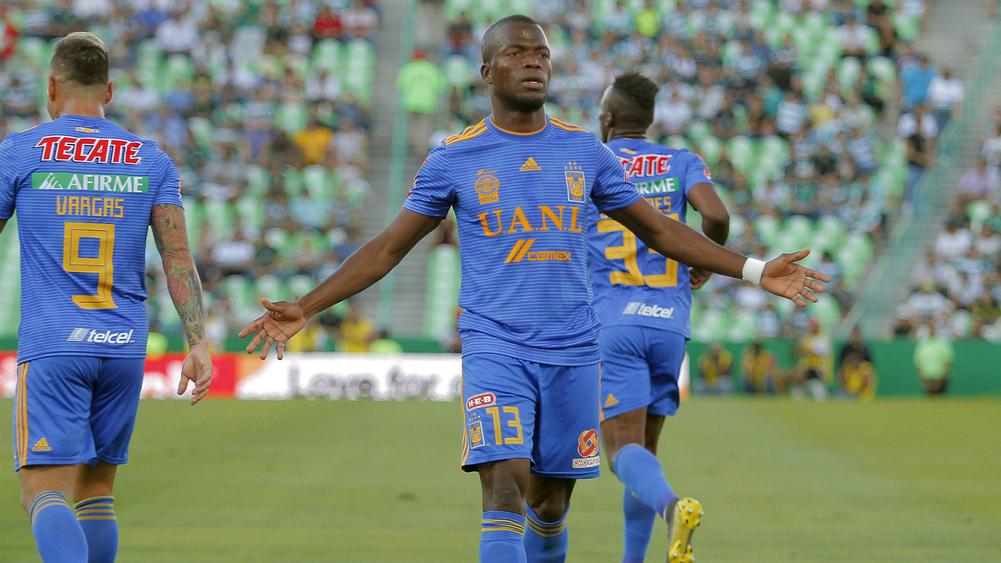
All of this means that 2020 is the year for Tigres to finally get the job done. The talent level is still very high. They've still got Gignac (Though they don't have Leo Fernandez for...some reason). And perhaps most importantly this time around, they have a good draw. After so many years of squaring off with the toughest Costa Rican competition around in the opening stage, Tigres have a relative breather against Alianza this year. No such thing as an easy win of course, and Alianza did give Rayados quite a scare just last year, but it's certainly a better draw than Saprissa.
Even better than that, though, is the fact that Tigres are the only Mexican club on their half of the bracket, meaning they will not see another Liga MX opponent until the final, if at all. This is an unbelievable advantage and one they cannot afford to squander. A second round matchup with San Carlos or the temporarily homeless NYCFC is again, about as good as you could hope for.
I don't think Tigres are going to fall off a cliff next year. Maybe they won't be the best team in the league every season, but I think the club's status has been permanently elevated to always expecting to at least be in the mix. But the CCL is not an easy tournament to qualify for, and it's even harder to win, as Tigres fans have learned all too well. With the way the cards are dealt right now, I think it's fair to say this is the best chance Tigres will EVER get at winning it, and they need to take advantage of it.
Tuesday, December 17, 2019
La Liga Mayor Final: Alianza vs CD FAS
The final of the Liga Mayor in El Salvador is set to kick off in just a few days, at 4:00 Eastern on Sunday night. The title game is a fantastic closing event to the year in Central American soccer, with most of the other leagues having finished their seasons already. It's a great showcase of how bigtime the game can get even in a tiny country like El Salvador; the final regularly fills up the 53,000 capacity Estadio Cuscatlán.
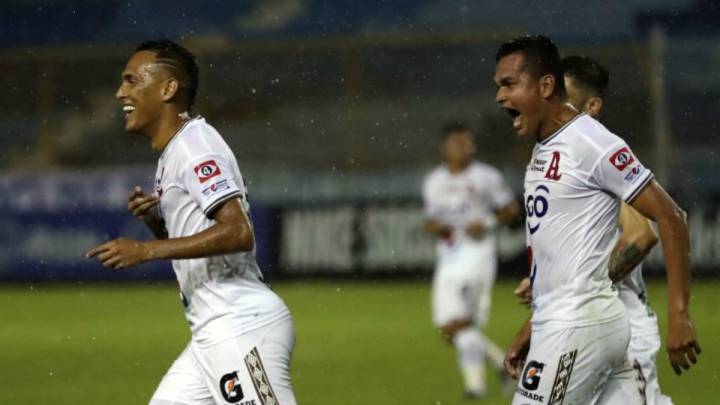
In this winter's contest you've got two of the giants of Salvadoran football: Alianza, the defending runner-ups, are competing in their seventh consecutive final. A tremendous run, but thus far they've got only 2 titles to show for it. Alianza made a deep run in the Concacaf League this season as well, knocking off San Francisco, Tauro, and San Carlos en route to the semifinals.
FAS on the other hand have not had the same recent successes as their opponents; this will be their first final since the 2015 Apertura, and the club have not raised the trophy since the 2009 Apertura. That's an incredibly long drought for the winningest team in the country (17 titles) and debatably the most popular.
For the neutrals, this is the match everyone wanted. Alianza had a fantastic season, earning the #1 seed with an impressive 48 points. FAS were a distant second with 37. Both received byes to the semifinals, where FAS advanced only on away goals while Alianza earned a comfortable 4-1 series win. Alianza may be a clear favorite, but the beauty of a one-off final like this is you can't count out anyone, let alone the 2nd best team in the country.
Alianza, the juggernauts of the season, produced the league's top offense (38 goals) and stingiest defense (18 against), led up front by Raul Peñaranda with 13 goals. The Colombian also had 4 goals in the Concacaf League. FAS have a Colombian forward of their own though; Brayan Gil Hurtado finished the season with 15 goals to his name. FAS as a team actually equaled Alianza's mark of 38 goals, but they conceded 7 more than their rivals.
This game has all the makings of a classic. The atmosphere is always electric. You've got #1 vs #2. Both teams and fanbases are hungry to perform in a final after so many recent failures. As always you may need to find a stream through...unconventional means, or go find a local restaurant that's showing the game, but isn't that sort of part of the fun?
Enjoy the game, and happy holidays to you all! Hopefully some cool stuff coming in 2020.
Tuesday, December 10, 2019
The Club World Cup is Good
The Club World Cup is a special tournament. Though often forgotten about in the mainstream of the sport, it’s still the World Championship. The Europeans may value the Champions League more, but they do not take the Club World Cup lightly and they send their A squad every year.
Football organization has always been about climbing up. From the tiniest club to the largest in the country, there is always the dream of ascending to the next level. You’ve got to earn your way into the top division. Then you’ve got to become national champions. Further still you must conquer your continent. And finally, at the end of the road, the highest you can ever climb is the Club World Cup.
And make no mistake about it, though the UEFA champion may value their own competition more (understandably so), to everyone else these are the biggest games of their lives. Ask the CONMEBOL teams that have won what it means to them. Ask the Mazembe fans of 2010 what it meant to get a chance to play for the title of World Champions against Inter Milan.
That chance to take a swing at Real Madrid or Liverpool is what every fan outside the top few leagues wants more than anything; and is the subject of endless discussion at pubs, cafes and restaurants around the globe. If Tigres ever got a crack at Real Madrid, oooooh just thinking about it is exciting.
I say all of this because like many people, I love the Club World Cup. Enough to wake up at 4:30 AM to watch the games when possible. But this year you don’t have to love it as much as me to enjoy; kickoff times are 9:30 and 12:30 Eastern.
It’s also one of the last chances you’ll get to enjoy it, in the current format at least. In 2021 when the tournament switches to a 24 team field ran once every four years there’s no doubt the feel will be different and something will be lost. This is a tournament for the reigning champions of each continent, not for the runners up of the Champions League three years ago. The group stage format also doesn’t have the same drama as the current knockout one, and surely you’ll never see an Oceanian team make it to extra time of a semifinal, as Auckland City did a few years back, under the new format.
But the point of this piece isn’t to mourn the death of the Club World Cup as we know it; it’s to get you excited for the 2019 edition. There are a lot of intriguing teams this year. Hienghene Sport from New Caledonia are the rare Oceanian representative not from New Zealand. They will look for a legendary upset in the opener against hosts Al-Sadd, who are certainly no slouches, having made the semifinals of the Asian Champions League last year.
Esperance de Tunis are one of the strongest African challengers we've ever seen, and their first round opponents Al-Hilal of Saudi Arabia are holding down first place in their home league and are fresh off a dominant run in the Asian Champions League.
Monterrey are headed back to the Liga MX final later this month, Liverpool are running away with the Premier League, and Flamengo won the Brazil Serie A title by 16 points in addition to their recent Libertadores crown. This might be the best group of teams ever assembled at this tournament.
So to recap for you, the Club World Cup: Dope every year, even better than usual, and on at a reasonable time (for anyone in the Americas at least). Please watch if you like fun.
Football organization has always been about climbing up. From the tiniest club to the largest in the country, there is always the dream of ascending to the next level. You’ve got to earn your way into the top division. Then you’ve got to become national champions. Further still you must conquer your continent. And finally, at the end of the road, the highest you can ever climb is the Club World Cup.
And make no mistake about it, though the UEFA champion may value their own competition more (understandably so), to everyone else these are the biggest games of their lives. Ask the CONMEBOL teams that have won what it means to them. Ask the Mazembe fans of 2010 what it meant to get a chance to play for the title of World Champions against Inter Milan.
That chance to take a swing at Real Madrid or Liverpool is what every fan outside the top few leagues wants more than anything; and is the subject of endless discussion at pubs, cafes and restaurants around the globe. If Tigres ever got a crack at Real Madrid, oooooh just thinking about it is exciting.
I say all of this because like many people, I love the Club World Cup. Enough to wake up at 4:30 AM to watch the games when possible. But this year you don’t have to love it as much as me to enjoy; kickoff times are 9:30 and 12:30 Eastern.
It’s also one of the last chances you’ll get to enjoy it, in the current format at least. In 2021 when the tournament switches to a 24 team field ran once every four years there’s no doubt the feel will be different and something will be lost. This is a tournament for the reigning champions of each continent, not for the runners up of the Champions League three years ago. The group stage format also doesn’t have the same drama as the current knockout one, and surely you’ll never see an Oceanian team make it to extra time of a semifinal, as Auckland City did a few years back, under the new format.
But the point of this piece isn’t to mourn the death of the Club World Cup as we know it; it’s to get you excited for the 2019 edition. There are a lot of intriguing teams this year. Hienghene Sport from New Caledonia are the rare Oceanian representative not from New Zealand. They will look for a legendary upset in the opener against hosts Al-Sadd, who are certainly no slouches, having made the semifinals of the Asian Champions League last year.
Esperance de Tunis are one of the strongest African challengers we've ever seen, and their first round opponents Al-Hilal of Saudi Arabia are holding down first place in their home league and are fresh off a dominant run in the Asian Champions League.
Monterrey are headed back to the Liga MX final later this month, Liverpool are running away with the Premier League, and Flamengo won the Brazil Serie A title by 16 points in addition to their recent Libertadores crown. This might be the best group of teams ever assembled at this tournament.
So to recap for you, the Club World Cup: Dope every year, even better than usual, and on at a reasonable time (for anyone in the Americas at least). Please watch if you like fun.
Sunday, November 24, 2019
December 2019 Concacaf Power Rankings
Differing slightly from my usual format of #ConcacafRank, this time around I'm just doing my own power rankings on what I've seen. And I have seen a lot of Concacaf football the past few months. I watched every single match of Nations League C, the majority of League A, and select League B matches. Add on top of that an entire Gold Cup over the summer.
It's a rare opportunity; we've had a lot of Concacaf on Concacaf crime in a small time frame and it finally gives us a good chance to evaluate the confederation as a whole. As a general rule I'm counting the Nations League and Gold Cup as the most important games; Nations League qualifiers (cause they were a while ago) and friendlies are valued a little less in my mind.
#1 Mexico
Gold Cup Champions, Nations League 1 seed, really no argument or debating here.
#2 Costa Rica
I barely edge them over the US on the basis of a great performance against Mexico at the Gold Cup and a big road win at Curaçao.
#3 USA
Their talent keeps them in the top 3 but coaching and complete inability to get results on the road leaves them vulnerable to dropping several spots in the near future.
#4 Jamaica
Jamaica's Nations League results were dominant, and they had a great Gold Cup. The friendly win over the US is not forgotten, either.
#5 Honduras
Honduras are really bouncing back lately, and are almost untouchable at home right now. Gonna be a serious pain for everyone else in the Hex.
#6 Curaçao
Had a stellar Gold Cup where they outplayed the US for 80 minutes (I was there!) and their Nations League results were impressive as well. They also beat a very good Vietnam team on penalties in June in the King's Cup.
#7 Haiti
Haiti have lost a step since their fantastic Gold Cup campaign, but you can't ignore that just a few months ago they beat Costa Rica and Canada back to back before taking Mexico to the edge and losing on a questionable penalty.
#8 Panama
Panama haven't been the same since their old guard departed after the World Cup. They barely stayed afloat in Nations League A and didn't impress at the Gold Cup.
#9 Canada
The team on the rise in the region; their momentum was stopped by Haiti over the summer but the big win over the US showed they're for real. In the mix for a Hex place, but do they want it? I think they might be better off playing through the tournament.
#10 El Salvador
Choked away a Gold Cup knockout spot but were good enough to get there, and then had a fine Nations League campaign including two wins over arch-nemesis Montserrat.
#11 Martinique
Martinique's ceiling is so high; you saw them go toe to toe with Mexico over the summer. A disappointing League A performance but they did enough to stay afloat.
#12 Bermuda
Bermuda showed promise at the Gold Cup, and really took off in their Nations League group, winning at Panama and nearly stealing a historic point in Mexico that would've kept them above relegation.
#13 Guatemala
Down in League C after their suspension, it's hard to judge them against the competition they've faced but 25 goals in four matches along with zero against is pretty good, no?
#14 Trinidad and Tobago
A program in complete shambles right now. They haven't won any official games since September of 2018.
#15 Suriname
Gleofilo Vlitjer. A god among men.
#16 Guadeloupe
Like Guatemala, they didn't face the steepest competition in League C, but they brought an absurd amount of talent over from France and look ready to return to their 2007/2009 heights.
#17 Grenada
Jamal Charles carried Grenada straight into the Gold Cup after a nearly flawless League B run; a really fun team to watch.
#18 Cuba
The unfortunate wave of defections means Cuba is not the same team they once were, but the talent that's still there is League B level.
#19 Guyana
Guyana score a lot of goals and have a very good home record; after a not so great 2019 Gold Cup they're in the playoffs for 2021 hoping to get another chance.
#20 Montserrat
We all want them to succeed, and they're now two series wins away from the Gold Cup. Can they do it? Maybe, but they need a friendly draw to help them out.
#21 French Guiana
Looked good to qualify for the Gold Cup at first glance, before running into the freight train that was Grenada. They'll be a threat in the playoffs.
#22 Saint Vincent and the Grenadines
Choked away a Gold Cup berth in their final Nations League game. A good side on their best day, but too inconsistent for my tastes.
#23 Dominican Republic
Haiti are the new darlings of the region, and the DR are the new Haiti. If you love grinding out 1-1 draws these are your guys, but they're damn good at it.
#24 Antigua and Barbuda
Another team with a ridiculous ceiling but is too inconsistent. Beat Guyana and even Curaçao, but struggled with a weak Aruba both times and got smoked by Jamaica twice.
#25 Belize
Deon McCaulay the perennial Belize goalscorer is still active and still scoring, but the rest of his team his regressed.
#26 Nicaragua
Same story with Nicaragua. Haven't done anything lately besides scrape out wins over Dominica, and they aren't trending upwards either.
#27 Barbados
Looked really good for the most part in League C, and have legitimately one of the best home records in the entire region. They've punched WAY above their weight at home lately, rarely ever conceding and even drawing Bermuda last March.
#28 St. Kitts and Nevis
A disappointing Nations League for the Sugar Boyz, who once looked destined to make the Gold Cup. They'll start the rebuild in League C next cycle.
#29 The Bahamas
The Bahamas had very little trouble in their group, even against a decent Bonaire side, and new coach Nesley Jean seems to have them playing at their peak.
#30 Saint Lucia
Relegation from a deep League B group was sort of expected, and they stayed alive til the final matchday. I think they'll bounce right back up next cycle.
#31 Cayman Islands
The best League C runner-ups by far. They nearly earned promotion over heavy favorites Barbados and showed out, particularly at home.
#32 Dominica
A dull campaign, but not a surprising one. And they did get to spoil Saint Vincent on the final day.
#33 Aruba
Aruba looked lost out there and lost all six Nations League games. Four or so years ago they looked to be on the up; now they'll need to start all over again in League C.
#34 Saint Martin
The most improved from the qualifiers to the real thing, for sure. Saint Martin picked up 3 wins including over Barbados and the Cayman Islands just one year after going 0-0-4 in qualifying with a horrendous goal differential.
#35 Bonaire
Bonaire had a tough time getting their actual full strength lineup out on the field, and if they could do that next cycle promotion may be on the cards.
#36 Puerto Rico
Had a long winless streak which they finally broke against Anguilla (twice), and the results against Guatemala were littered with penalties that maybe shouldn't have been. Still a long way to go, but things are improving.
#37 Turks and Caicos Islands
When Billy Forbes plays, they're pretty dangerous going forward but have a swiss cheese defense. When Billy Forbes doesn't play? Bad things happen.
#38 US Virgin Islands
The USVI went 1-5 in their six group matches but almost all of them were competitive and the team really just needed one person to step up and score goals.
#39 Sint Maarten
Gerwin Lake is ridiculous. Like he is so far ahead of the typical League C player its comical. But one man isn't enough to save Sint Maarten completely.
#40 Anguilla
After the great showing against Puerto Rico at home (3-2 defeat) and an away draw to The Bahamas in CNLQ, Anguilla have earned their way out of the cellar.
#41 British Virgin Islands
A ridiculously young team, but also one that dropped all four League C games despite holding the lead in two of them. The defense needs work and endurance was a problem throughout the group stage, but this team is by no means a lost cause.
It's a rare opportunity; we've had a lot of Concacaf on Concacaf crime in a small time frame and it finally gives us a good chance to evaluate the confederation as a whole. As a general rule I'm counting the Nations League and Gold Cup as the most important games; Nations League qualifiers (cause they were a while ago) and friendlies are valued a little less in my mind.
#1 Mexico
Gold Cup Champions, Nations League 1 seed, really no argument or debating here.
#2 Costa Rica
I barely edge them over the US on the basis of a great performance against Mexico at the Gold Cup and a big road win at Curaçao.
#3 USA
Their talent keeps them in the top 3 but coaching and complete inability to get results on the road leaves them vulnerable to dropping several spots in the near future.
#4 Jamaica
Jamaica's Nations League results were dominant, and they had a great Gold Cup. The friendly win over the US is not forgotten, either.
#5 Honduras
Honduras are really bouncing back lately, and are almost untouchable at home right now. Gonna be a serious pain for everyone else in the Hex.
#6 Curaçao
Had a stellar Gold Cup where they outplayed the US for 80 minutes (I was there!) and their Nations League results were impressive as well. They also beat a very good Vietnam team on penalties in June in the King's Cup.
#7 Haiti
Haiti have lost a step since their fantastic Gold Cup campaign, but you can't ignore that just a few months ago they beat Costa Rica and Canada back to back before taking Mexico to the edge and losing on a questionable penalty.
#8 Panama
Panama haven't been the same since their old guard departed after the World Cup. They barely stayed afloat in Nations League A and didn't impress at the Gold Cup.
#9 Canada
The team on the rise in the region; their momentum was stopped by Haiti over the summer but the big win over the US showed they're for real. In the mix for a Hex place, but do they want it? I think they might be better off playing through the tournament.
#10 El Salvador
Choked away a Gold Cup knockout spot but were good enough to get there, and then had a fine Nations League campaign including two wins over arch-nemesis Montserrat.
#11 Martinique
Martinique's ceiling is so high; you saw them go toe to toe with Mexico over the summer. A disappointing League A performance but they did enough to stay afloat.
#12 Bermuda
Bermuda showed promise at the Gold Cup, and really took off in their Nations League group, winning at Panama and nearly stealing a historic point in Mexico that would've kept them above relegation.
#13 Guatemala
Down in League C after their suspension, it's hard to judge them against the competition they've faced but 25 goals in four matches along with zero against is pretty good, no?
#14 Trinidad and Tobago
A program in complete shambles right now. They haven't won any official games since September of 2018.
#15 Suriname
Gleofilo Vlitjer. A god among men.
#16 Guadeloupe
Like Guatemala, they didn't face the steepest competition in League C, but they brought an absurd amount of talent over from France and look ready to return to their 2007/2009 heights.
#17 Grenada
Jamal Charles carried Grenada straight into the Gold Cup after a nearly flawless League B run; a really fun team to watch.
#18 Cuba
The unfortunate wave of defections means Cuba is not the same team they once were, but the talent that's still there is League B level.
#19 Guyana
Guyana score a lot of goals and have a very good home record; after a not so great 2019 Gold Cup they're in the playoffs for 2021 hoping to get another chance.
#20 Montserrat
We all want them to succeed, and they're now two series wins away from the Gold Cup. Can they do it? Maybe, but they need a friendly draw to help them out.
#21 French Guiana
Looked good to qualify for the Gold Cup at first glance, before running into the freight train that was Grenada. They'll be a threat in the playoffs.
#22 Saint Vincent and the Grenadines
Choked away a Gold Cup berth in their final Nations League game. A good side on their best day, but too inconsistent for my tastes.
#23 Dominican Republic
Haiti are the new darlings of the region, and the DR are the new Haiti. If you love grinding out 1-1 draws these are your guys, but they're damn good at it.
#24 Antigua and Barbuda
Another team with a ridiculous ceiling but is too inconsistent. Beat Guyana and even Curaçao, but struggled with a weak Aruba both times and got smoked by Jamaica twice.
#25 Belize
Deon McCaulay the perennial Belize goalscorer is still active and still scoring, but the rest of his team his regressed.
#26 Nicaragua
Same story with Nicaragua. Haven't done anything lately besides scrape out wins over Dominica, and they aren't trending upwards either.
#27 Barbados
Looked really good for the most part in League C, and have legitimately one of the best home records in the entire region. They've punched WAY above their weight at home lately, rarely ever conceding and even drawing Bermuda last March.
#28 St. Kitts and Nevis
A disappointing Nations League for the Sugar Boyz, who once looked destined to make the Gold Cup. They'll start the rebuild in League C next cycle.
#29 The Bahamas
The Bahamas had very little trouble in their group, even against a decent Bonaire side, and new coach Nesley Jean seems to have them playing at their peak.
#30 Saint Lucia
Relegation from a deep League B group was sort of expected, and they stayed alive til the final matchday. I think they'll bounce right back up next cycle.
#31 Cayman Islands
The best League C runner-ups by far. They nearly earned promotion over heavy favorites Barbados and showed out, particularly at home.
#32 Dominica
A dull campaign, but not a surprising one. And they did get to spoil Saint Vincent on the final day.
#33 Aruba
Aruba looked lost out there and lost all six Nations League games. Four or so years ago they looked to be on the up; now they'll need to start all over again in League C.
#34 Saint Martin
The most improved from the qualifiers to the real thing, for sure. Saint Martin picked up 3 wins including over Barbados and the Cayman Islands just one year after going 0-0-4 in qualifying with a horrendous goal differential.
#35 Bonaire
Bonaire had a tough time getting their actual full strength lineup out on the field, and if they could do that next cycle promotion may be on the cards.
#36 Puerto Rico
Had a long winless streak which they finally broke against Anguilla (twice), and the results against Guatemala were littered with penalties that maybe shouldn't have been. Still a long way to go, but things are improving.
#37 Turks and Caicos Islands
When Billy Forbes plays, they're pretty dangerous going forward but have a swiss cheese defense. When Billy Forbes doesn't play? Bad things happen.
#38 US Virgin Islands
The USVI went 1-5 in their six group matches but almost all of them were competitive and the team really just needed one person to step up and score goals.
#39 Sint Maarten
Gerwin Lake is ridiculous. Like he is so far ahead of the typical League C player its comical. But one man isn't enough to save Sint Maarten completely.
#40 Anguilla
After the great showing against Puerto Rico at home (3-2 defeat) and an away draw to The Bahamas in CNLQ, Anguilla have earned their way out of the cellar.
#41 British Virgin Islands
A ridiculously young team, but also one that dropped all four League C games despite holding the lead in two of them. The defense needs work and endurance was a problem throughout the group stage, but this team is by no means a lost cause.
Saturday, November 2, 2019
Motagua vs Saprissa: 2019 Concacaf League Finals Preview
The 2019 Concacaf League final is set, and Motagua (Honduras) and Saprissa (Costa Rica) will meet over two legs to determine the champion of Concacaf's second tier continental tournament. Both clubs have already qualified to the 2020 Champions League, but the series still has plenty of juice; it is a final after all.
Motagua come in as the higher seed and will travel to San José for the first leg on November 7th, then return home for the second match on the 26th. This is the third edition of the Concacaf League, and the third straight final to feature a Honduran team vs a Costa Rican team. Olimpia (HON) defeated Santos de Guapiles (CRC) in the inaugural tournament, while Herediano (CRC) beat Motagua last year for the crown.
Road to the Finals
MOTAGUA entered during the Round of 16 and have remained unbeaten throughout:
2-1 W at Managua
1-1 D vs Managua
2-0 W at Waterhouse
0-0 D vs Waterhouse
1-1 D at Alianza
3-0 W vs Alianza
As you can see, three huge road results have carried Las Aguilas thus far, and they've mostly treaded water at home. Worth noting however, their previous two home matches were played out of town behind closed doors due to the violence at a domestic match two months ago, but the final will be at home in front of a full crowd.
SAPRISSA have had a more conventional run. They had to enter in the preliminary round and played one extra series as a result:
3-1 W at Belmopan Bandits
3-1 W vs Belmopan Bandits
2-0 W vs Aguilá
1-0 L at Aguilá
3-2 W vs CAI
1-0 W at CAI
2-0 L at Olimpia
4-1 W vs Olimpia
Four big wins at home, as you would expect from a team that plays in one of the most feared fortresses in the Americas. They also beat Mexican champion Tigres in the Monster's Cave back in February during the CCL.
Key Players
Saprissa possess the two top scorers in the competition; Johan Venegas with 6 and the youngster Manfred Ugalde with 4. Very different players, but both are a joy to watch. Ugalde is just 17 years old and has a very long future ahead of him for La Sele, while Venegas has matured into a clinical goalscorer that Saprissa can rely on after his stint in MLS.
Midfielder Marvin Angulo has been putting in work in Concacaf play for some time now, and it showed once again when the veteran had two massive goals (and good ones, at that) in the epic comeback against Olimpia in the semifinal.
Motagua have spread the wealth much more in this tournament; defender Juan Montes leads the team with 2. Six other players have contributed once, and they scored once via an own goal. Even in their domestic league, it's true that they lack a player who scores at the rate of Venegas, but Roberto Moreira is still a capable striker to say the least.
In the midfield Erick Andino is not all that different from Angulo. He's been bossing the midfield for a long time, scores a decent amount of goals, and brings a veteran presence that pays dividends in big games.
History
As two giants of Central America, this isn't the first time these two have met in a competitive series. The most notable clash was the 2007 UNCAF Interclub Cup final, where Motagua emerged victorious 2-1 on aggregate after Jocimar Nascimento's dramatic home winner.
But aside from the famous defeat, El Monstruo Morado has had the upper hand. Saprissa defeated Las Aguilas 2-1 in the group stage of the 2001 edition of the same tournament, and 2-0 in the 1999 group stage. The two sides also drew in the 1997 and 1998 group stages.
In Concacaf play, the two sides haven't met since 1995, when Saprissa won a two legged series 4-0 in the first round of the Concacaf Champions' Cup. Saprissa also won 5-0 on aggregate way back in the first round of the 1971 Champion's Cup, and 5-1 in 1969.
Subscribe to:
Posts (Atom)