Monday, September 6, 2021

Concacaf W: Good Eats


Ooops, I am behind on Concacaf news. Was too busy with school and work to churn out a post as soon as the press release dropped, but I certainly wanted to weigh in on the recent announcement of the new "W" rebrand in Concacaf.  The short of it: there is now a new Women’s Gold Cup and a fresh format for World Cup qualification in the region. Feel free to watch the official video explanation of things here.

But wait, you say, there has already been a Women’s Gold Cup! You are mostly correct. There have been several Women’s Gold Cups before. But the Women’s Gold Cup (which doubled as a continental championship and World Cup qualifiers) is now rebranded as the W Championship, and the W Gold Cup is a completely new tournament. Not exactly the greatest naming scheme in the world. Concacaf's competition names have never been my favorite.

But aside from the poor names, what exactly has changed here? Let’s start with the W Gold Cup. Not to make things even more confusing, but this tournament actually also resembles something of a W Nations League. Essentially there will be a qualifying phase where teams are divided into Leagues A, B and C and split into groups within each league. From there the League A group winners will qualify to the Gold Cup, with the League A Runner Ups and League B winners going to a playoff much like the Men’s Nations League/Gold Cup. This pathway produces a total of six teams, plus USA and Canada who will skip the Nations League phase entirely and automatically qualify. There will also be four invited teams to the 2022 W Gold Cup. Exciting stuff!

The final tournament will undoubtedly be completely awesome. This is going to be much cooler and more fun than the previous era of Women’s Gold Cups. It is also good that a pathway has been created to get lower ranked national teams more matches. Concacaf recognized how quickly this system improved the overall level of play on the men’s side and it is wise to implement a similar system here. Overall I have basically nothing but good things to say about the new competition. Other than that the branding is el stinko, of course. Is there some sort of international law that your WoSo branding must incorporate a ponytail?

As for the Concacaf W Championship, which has inherited the history of the old Gold Cup and is now the pathway to the World Cup, my feelings are more mixed. Again, it is good to get all these teams more games, but I worry more about how productive some of these matches will be. In the W Gold Cup qualification phase, teams are divided by League into groups of relatively equal strength; it is hardly perfect, but it will prevent a lot of unbalanced games.

In the W Championship, with groups made up of a single team each from Pots A-E, you wind up with a lot of wildly unequal games. What exactly is the point of having Anguilla play Mexico? There is a benefit to playing teams better than you, but that has its limits. There is nothing to be gained from a 15-0 defeat. We just learned this from the 2022 Men’s qualification cycle. Anguilla, the US Virgin Islands, Turks and Caicos, etc. would have been much better served playing a preliminary round amongst each other first. It is a little disappointing to see Concacaf not make this change.

But still, the W Championship looks promising. The first round may not be the most exciting thing in the world, but once it gets down to that final eight expect some more high stakes good eats. Can’t wait to see it all unfold.


Tuesday, August 24, 2021

Long Live the Hex


The final round of CONCACAF Men's World Cup qualification starts soon. The confederation still has the traditional 3.5 slots, with the top three teams in the final round advancing directly to the World Cup and the 4th place side going to the inter-confederation playoff for a second chance at glory. But something looks very different about the Hex this time around. It doesn't exist! Of course, as we all know by now, the Hex is dead and has been replaced by its bigger and meaner cousin, the Octo. 

An exciting time for football in the region, for sure. After all, we've been blessed with an extra four rounds of matches in this final, dramatic conclusion to qualification that is quite frankly the premier CONCACAF international tournament. The Gold Cup is beautiful and fun in its' own way, but the Hex has always been the real proving grounds where the big boys separate themselves from the rest of the pack, and the Hex is where all the highest quality and most dramatic football on the men's circuit is played. 

None of that will change with the Octo. The level of play in the region has increased to the point where there are legitimately eight teams that can compete at this level, and while the duopoly of Mexico and the US looks to be the strongest it has been for a long time, 3rd and 4th place are up for grabs for more or less everyone else in the field. Whoever you think is the weakest team (consensus is El Salvador or Panama) still can very much achieve 4th.

The upcoming international breaks are going to be an awful lot of fun. There will be good football, drama, heartbreak, jubilation; the good stuff. As always we hope for minimal virus related issues and that the teams and fans can play everything out as safely as possible, especially after the Gold Cup was marred by several outbreaks. 

But in spite of my excitement for the Octo, I also feel a bit sad for the Hex. The Octo is bigger and better; an improvement over the original in every way, but it is not the Hex. The end of the Hex is the end of an important chapter in CONCACAF lore; a competition that fans of the region's strongest teams have come to love. If you're reading this you know how much the competition means to USA and Mexico fans, but it also means so much to Costa Ricans, who are immensely proud of the team's 2002 first place finish. Trinidad, Panama and Jamaica have fond memories of the Hex as the final test in their only successful World Cup qualification campaigns thus far. Even Canadian fans, who only experienced the final round one time, in the 1998 cycle, looked at the Hex with a sort of reverence. 

It was the final challenge; the point where your mettle was really tested. Everyone in the region knew that outside of the World Cup itself (and the Confederations Cup, I suppose), games in the Hex were your toughest matches, period. The United States and Mexico could no longer hide behind the friendly crowds and group assignments of the Gold Cup, but had to face the same obstacles as the rest of the field. Every road trip was a mountain to climb, and every home match was a must-win. Mexico, the US, and Costa Rica (the only three teams that were in every Hex) combined for a grand total of 8 home defeats in 90 home matches throughout the competition's lifetime. Honduras' home record isn't far behind.

There was an aura and a mystique to it. Ultimately, there was no reward for winning it; only for finishing in the top half, and CONCACAF never really promoted the Hexagonal as anything more than an avenue for qualification, but the fans of those at the top came to care about it. Finishing first in the Hex meant you were the strongest team in the region, simply put. In that way, it was a kind of pure test of strength that is rarely seen in modern sports; you were competing not for a trophy, not for a higher seed in the knockout round, not for any tangible thing. You were only competing to be able to say you were the best.

Even the name has its own aura about it. In the English speaking world at least, the term "Hex" is almost never used in an official capacity. A search of CONCACAF's own website reveals a single result for "Hex." Instead, the competition is always referred to as the more proper Hexagonal or simply Fourth/Fifth Round of Qualification. But certainly from USA to Canada to Trinidad to Jamaica, it is the Hex. An affectionate fake name for a fake competition that was never supposed to be anything more than the last part of the qualification process. But the Hex took on a life of its' own.

Now aside from the fact that the Octo isn't nearly as catchy of a name and that it will likely be scrapped in 2026 when the qualification for CONCACAF is going to get all sorts of messed up, there is no reason to think any of this will change. There will be plenty of great moments over the course of the Octo that will earn their place in CONCACAF lore right alongside things the 2013 snow game and Panama's dramatic qualification in 2017.  

But to evoke a slogan from a different CONCACAF tournament, the Hex was ours. It was organized by the confederation, but it was built by the fans into a different beast. It became the pinnacle of CONCACAF football because we made it that way. Long live the Hex.


Wednesday, July 7, 2021

Guatemala's Painful Penalties

Guatemala fell last night in the 12th frame of a penalty shootout to fellow League C foe Guadeloupe, missing out on the Gold Cup yet again after having been suspended for the previous two iterations. It was a heartbreaking defeat for a country that already suffered last month when they were eliminated from World Cup Qualification on goal differential despite never conceding a single goal and netting 14 of their own. It was also, according to the knowledgeable Mister Chip, tied for the longest shootout in a major tournament in history. Guadeloupe, on the other hand, are back to the Gold Cup for the first time since 2011, and look like they could cause a bit of an uproar in Group C.

But back to Guatemala. This was a horribly painful penalty defeat. Not only because they lost it, but also how it happened. The typically reliable Marvin Ceballos missed twice. Ricardo Jérez, the late goalkeeper substitute who was brought on as a penalty specialist, was largely ineffective. It was a shootout that felt like Guatemala should have won it several times, but ultimately it just did not come together and they went home.

Penalties are not a lottery. There is an art to taking penalties, and there are good penalty teams and bad penalty teams. But there are times when it feels like you've just been burdened with some bad luck. Between the 1992 AFCON final when Ghana lost on penalties to Ivory Coast and the 2015 AFCON final when Ghana lost on penalties to... Ivory Coast (both in marathon shootouts, no less!), a dark fog seemed to hang over all of Ghanaian football. I don't have the exact numbers any more, but I recall reading that between all the national teams (Men's + Women's, Seniors + Youths) and club teams in continental play that Ghanaian sides were something like 3-20 in shootouts during this period. Not to mention what happened during the 2010 World Cup! They were simply cursed. 

Now that fog seems to be migrating to Central America. This is not Guatemala's first painful penalty defeat. You may recall that only a few months ago Comunicaciones lost in 18 frames to Motagua under similar circumstances; Comunicaciones certainly seemed like they were going to win for the majority of the marathon, and Gerardo Gordillo missed both his kicks, just like Ceballos did last night. It was an epic finish for us neutral fans but a crushing experience for Guatemalan football.

Curses may not be real in the magical sense, but people have the power to make them real. It is well known in Ghana that they suffer from a penalty curse, and it certainly adds a lot of pressure and doubt to each and every team that enters a shootout. And it only grows worse each time an attempt to undo the curse, whether it be through a priest's magic or a sports psychologist's mental exercises, inevitably fails. They have cursed themselves, in a sense. The same sentiment is beginning to brew in Guatemala. If they do not bounce back from these defeats soon, they may well find themselves suffering from a penalty curse of their own. 

A good place to start would be to tell Gordillo, who is a combined 0-for-3 in the two shootouts mentioned above, to stop taking kicks. Maybe try focusing inwards more rather than jawing at the opposition, as several penalty takers did last night. Or maybe they need to just keep doing exactly what they've been doing and not waver in confidence, knowing the results will come soon enough. We don't know exactly what they are or aren't doing wrong, and that's part of what makes penalties so exciting. I don't think Los Chapines are facing a full blown penalty crisis just yet, but this is certainly a storyline worth keeping an eye on in the future.


Saturday, June 26, 2021

What do Qatar bring to the Gold Cup?


The 2021 CONCACAF Gold Cup is set to kick off on July 10th, with a qualifying round starting on July 2nd to settle the final three spots in the 16-team group stage. In the field you have your usual suspects; Mexico, USA, Costa Rica, Honduras, Jamaica, etc. But you'll also spot in Group D the return of an old Gold Cup tradition; the guest team. This time around it is 2022 Men's World Cup hosts Qatar, who are making their Gold Cup debut.

Qatar are a very often misunderstood team in this part of the world, so I wanted to bring a little clarity to what exactly they bring to the Gold Cup this year. 

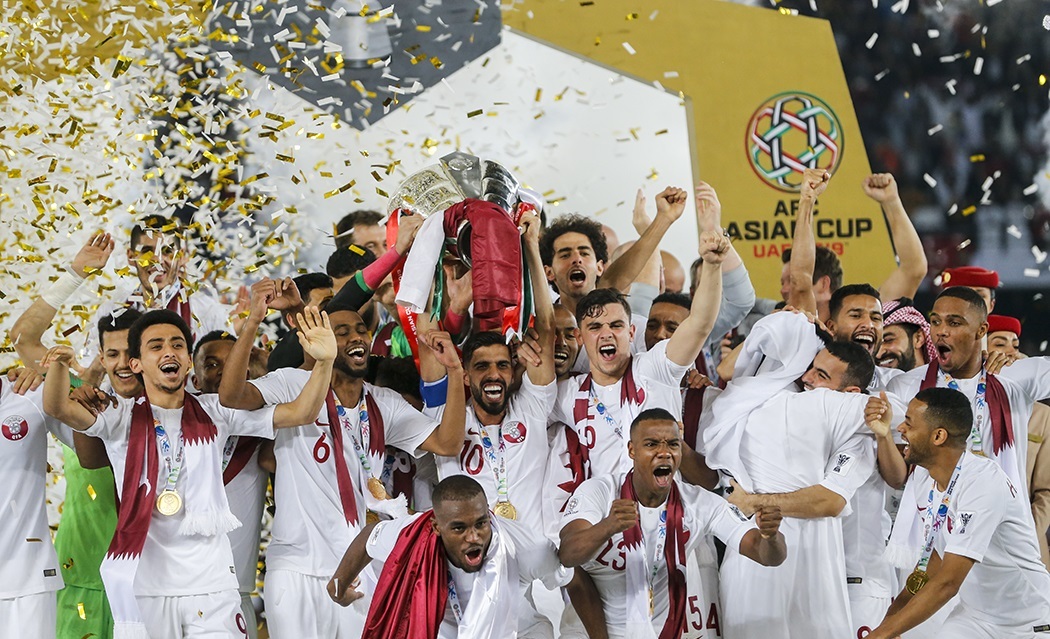
They're good. Real good. Much talk has been made about how Qatar will be likely the worst team to ever host the World Cup, but over the past few years I think they have certainly shown they are very much at a World Cup level. Qatar are actually the reigning Asian champions, having won the 2019 AFC Asian Cup in dominating fashion. It might even be fair to say that their performance in 2019 was the most dominating in the history of the Asian continental championships. 

In that tournament, Qatar won 7 out of 7 matches, scored 19 goals, and conceded just once, to Japan in the final. They beat 2018 World Cup participants Saudi Arabia (2-0), South Korea (1-0), and Japan (3-1) and thrashed the UAE 4-0 in the semifinals. They were far and away the best team in Asia, a confederation that at the top is often measured to be at a similar level to Concacaf. It's very fair to say at the time Qatar were on par even with Mexico.

Almoez Ali scored nine goals at that tournament, and his partner in crime Akram Afif had 10 assists. A total of 8 Qataris made the team of the tournament.

They've got experience. Besides for their Asian Cup run, this generation of players also were able to play in the 2019 Copa America later that year, where they didn't fare nearly as well, finishing with only one point. To be fair, it was a tough group; they drew Paraguay and lost 1-0 to Colombia and 2-0 to Argentina.

The experience of traveling to the Americas to play an international tournament will not be a new one for many of these players, though of course they've never done so during a pandemic. But having a better feel for the travel and schedule can't hurt, and their group of Honduras, Panama and Grenada certainly is much weaker than what they faced in Brazil 2019.

They aren't bending the rules. Much fuss has been made in the past about Qatar naturalizing athletes from other countries to compete at the Olympics and in other sports, and this has carried over to football. Many people upon hearing that Qatar dominated the Asian Cup wanted to know which Brazilians had moved over there. I think talking about the rules on naturalizing citizens is a dicey discussion, but we actually don't have to get deep into it here because Qatar's football team isn't really built that way.

Of the 11 starters from that Asian Cup run, seven were born in Qatar and two more moved there when they were toddlers (one of those two, young star Almoez Ali, is also eligible through his Qatari born mother). Simply put, the criticisms of them abusing the rule about naturalized citizens are made up. And of course this is to say nothing of the fact that international football is a game played by international citizens, and many (most!) national teams have taken to recruiting dual nationals and naturalizing players. There is nothing wrong with that; but even if there were, Qatar are hardly the worst offenders.

There are lots of things to be mad at Qatari World Cup organizers about, but there is nothing villainous about the football team itself. Unless you are a big Japan fan, I suppose. Hopefully they bring with them some of their early 2019 form and put on a good show. How far will they go? It's conceivable that they win the whole thing, but it's also more than possible they flunk out of a strong group with Honduras and Panama. I'll pencil them in as losing a tight quarterfinal match-up against Mexico.

Wednesday, June 9, 2021

Concacaf WCQ: First Round Rambles, Second Round Hype

An Anticlimactic First Round?

The first round of 2022 World Cup qualification in the Concacaf region is complete. Emerging victorious from the six groups are El Salvador, Canada, Curacao, Panama, Haiti, and the surprise St. Kitts and Nevis. Across the four rounds of play, there was a lot of good football played and I thought it was a lot of fun. 

I find myself writing about competition formats quite frequently, probably too frequently, but I am going to do so again here anyway. I don't really think that this format was a fair or fun way to decide who advances and who doesn't. Ignoring the byes given to the top five teams (which I largely have no issue with), there is just something that doesn't feel quite right about how this group stage ended.

On the final day, we had five group deciding matches being played. In all five of them, the group favorite was at home, only needing a draw to advance. Canada, Haiti, El Salvador, and Panama all won anyway, while only Curacao actually coasted to a 0-0 draw to advance. Now don't get me wrong, I think that ultimately the best team won every group and nobody can really feel too hard done, but I'm not sure that Pot 1 hosting Pot 2 on the final matchday is really giving a fair shot to those Pot 2 teams. Would things have gone differently if it was Suriname hosting Canada? (For what its worth, Canada was not in Canada, of course.)

The Pot 1 teams were presumably given this as an advantage for being seeded; but being seeded is itself the advantage. To also give the top seeds a big advantage in the match against their only strong competition is a little much in my opinion. Compounding with this issue is the fact that goal difference was the all-important tiebreaker. Normally it is a logical tiebreaker, but in these circumstances where the big teams are running up the score on Anguilla and the British Virgin Islands, it seems a bit silly to have it play such a critical role. Guatemala crushed their opposition, did not concede any goals, and went on the road to Curacao and did not lose, but they are out because Curacao beat up the weak teams a tad more.

I don't think it made for a particularly exciting final day from the fan perspective, either. All the top teams only had to hold serve and we all knew that was almost certainly going to happen. It just worked out that both possible outcomes were not going to be very thrilling; El Salvador comfortably beating Antigua in a relatively full Cuscatlán was nothing special nor was Curacao grinding out a 0-0 draw.

Ultimately, like I said, I think Curacao are the better team and have the much better shot at beating Panama, and it has to be said that Guatemala definitely *could* have beaten Curacao and then they wouldn't need me to make this excuse for them, but I feel it was a little bit of an anticlimactic way to go out. Is it fair? Maybe? But hey, even if it wasn't, we got the "fair" results so I can't complain. Anyway, the second round promises to be more exciting, and the octagonal promises to be even more exciting than that, so I don't want to sound too negative.

Looking Ahead

The second round takes place later this month, and has a much simpler win and you're in format. The two legged ties for a place in the octagonal will be as follows: 

St. Kitts and Nevis vs El Salvador

Haiti vs Canada

Panama vs Curacao

St. Kitts did great to get this far, seizing their moment in a weaker group and defeating Guyana to clinch before the final match even started. But over two legs, it is hard to see them dealing with El Salvador, who are eager to get into the final round after having been removed from it due to the format change.

Haiti vs Canada is an exciting storyline as a rematch of the best game of the 2019 Gold Cup and one of the best games in Gold Cup history. Canada come in looking awfully good while Haiti have been just decent when compared to the 2019 version of themselves. I believe Canada will win this one, but hopefully Haiti can give us another classic.

Panama vs Curacao is an interesting series that is tough to call. Both teams have World Cup dreams and to fall out before even making the octagonal would be a miniature disaster, but only one can move on. Panama really labored through the March window, just squeaking past Barbados and Dominica but they really put the hurt on the DR in the game that mattered the most. Curacao did quite the opposite, they looked so strong throughout the round but in the decider against Guatemala just barely skated by. I'll take Panama, but not by much.

Wednesday, June 2, 2021

USL League Two, Player Development, and Supporting Local Soccer

Hello everyone, I return! Had a very busy spring but now am going to try to do a few posts here and there during this exciting Gold Cup/Nations League/WCQ summer. We're back today to discuss the USL League Two, an interesting lower league in the United States with a very not-interesting name. Oh how I wept when the USL decided to name its three leagues the Championship, League One, and League Two. But despite my grumbles about copying an English naming scheme, I like the USL League Two a lot. It's a great source of local soccer and I have found myself going to few games in the area every summer (besides last year, obviously) for a while now. 

There are around 80 League Two clubs scattered across the US as of right now, and they play a 14-game regular season that culminates in a 16 team playoff tournament from May-July. But after going to a few games this past month (my first three events since the pandemic hit!), I wanted to talk about where the USL2 stands in the US soccer world. The venerable sage of Concacaf, Jon Arnold, wrote last year about the relationship between minor league soccer and minor league baseball. It's well worth your time if you haven't read it before.

To continue with that same school of thought, if the USLC and USL1 are in some ways the new minor league baseball, then the USL2 is a combination of all the famous wood-bat collegiate baseball leagues across North America. It is a league stocked mostly by college players looking to maintain NCAA eligibility, though there are a few veterans from pro teams or just older amateurs on many rosters as well. But why does every baseball fan know what the Cape Cod League is, and not many soccer fans (even fans of American soccer) know about the USL League Two?

This is the question I have been asking myself over the past week. Here we have a strong developmental league that produces MLS draft pick after MLS draft pick, and yet even MLS diehards do not seem to care. Going to many of these games around New Jersey, the crowds are mostly parents and local coaches, with "conventional" fans mostly only showing up to playoff matches or special event nights. Why aren't the diehard Union fans showing up in nearby South Jersey to see some of the top draft prospects? Where were the Red Bulls fans when Jersey Express (who supplied several players to the Bulls over the years) were playing games at NJIT just a mile away from Red Bull Arena? 

When I ask the question: 'why does nobody care about the USL League Two?' I of course understand why most people do not care about it. It's not supposed to be widely cared about. But while the other USL divisions flourish with the more niche soccer audience, the USL2 generally speaking, does not. There are a few exceptions of course. The highly successful Mid-Michigan Bucks, after moving to Flint in 2019, drew crowds of 5000+. And in Des Moines, which lacks a pro-team, the Menace have had averaged a few thousand fans for decades. But these cases are few and far between.

Now one thing that people are going to say about a league that feeds into the MLS draft pool is that, well, the MLS draft is mostly a worthless endeavor with the exception of a handful of players at the top. In reality, the MLS draft stocks the USL Championship, not MLS. But can the same not be said about the Cape Cod League and the MLB draft? There are literally thousands of players drafted into organized baseball every year, and only a small percentage of them ever make the big leagues. So the Cape Cod League (or any moderately successful collegiate summer league) boasting about how many MLB draft picks they have among their ranks is ultimately not that impressive, yet those boasts draw in respectable crowds. The USL League Two makes similar boasts (75% of the players drafted in 2020 played in the USL2), yet it does not draw in fans the same way.

I don't really have a grandiose point to make about the USL League Two, but I feel like this conversation is worth having. US Soccer fandom seems to emphasize local soccer so much; fans love to talk about what it means to support their local club and after the recent Super League debacle I think fans all over the world have taken a closer look at what they can do to support the local game instead of the big boys. And yet, the USL League Two, a fantastic product with an interesting player pool, cheap tickets (often free tickets), and a summer schedule that largely doesn't conflict with European or Mexican leagues, doesn't seem to be gaining any traction. 

If you have a local League Two club, and unless you live in Montana you most likely do, I really recommend checking out a game this summer and seeing how it is. Thank you as always for reading, and enjoy this week of Nations League and World Cup qualifying!

Wednesday, February 24, 2021

March Concacaf Qualifers and Blog Update

Hi everyone! If you happened to read my latest tweet you already know I am going to be temporarily taking a break from Concacaf Lives! Long story short I am very busy at the moment and overwhelmed with stuff and quite frankly just don't feel like writing anything right now. 

I have taken breaks before, and in fact, that is one of the main reasons that I prefer to just keep my thoughts to a personal blog. I can stop to take a breather whenever I want, and there is no real obligation to anyone else because its *my* blog. But this time it is a little different, because I did just start a series of posts and say I was going to look at every group and now I am not going to do that. Sorry for that.

I will still be watching as many of the qualifiers as time allows and will probably still be tweeting dumb jokes about my beloved Suriname, but that's about it. I anticipate getting back into the groove in a few months when things settle down, ideally with less generic previews and more interesting stories. See you then, and as always thank you for reading :)

Saturday, February 20, 2021

Concacaf World Cup Qualifying: Group A Storylines

Well well well. It appears that finally, after a long wait, there will be Concacaf World Cup qualifiers starting this March. It will not be a normal qualification cycle in any way, shape or form, with the numerous logistical complications that come with the pandemic. As of now there are some plans in place for neutral site games, and I seriously doubt that every team will be playing at full strength. While Raul Jimenez might get an exception regarding quarantine rules, I don't think your preferred Concacaf Nations League C side will get the same treatment. But it certainly does seem at this point like it will be happening.

So it is going to be weird. Hopefully it is going to be safe. Concacaf had pretty good protocols in place for their continental tournaments, so I'd expect to see a similar level of care taken with these matches. As is always the case here on one of your favorite Concacaf focused soccer platforms, I will be going over the storylines and what to keep an eye on in each group. I'm not going to get too in depth on players, because we simply have no idea who will make it to these games and who won't, especially with the smaller teams in the first round.

To refresh your memory, this first group stage features six groups of five teams each. Each side will play everyone else in their group once, for a total of two home games and two away games. The six group winners will meet in the head-to-head second round, where the top three will advance to the new Octagonal to join the already qualified top 5 of Mexico, the US, Costa Rica, Honduras, and Jamaica.

So today we begin with (surprise surprise) Group A, which features the favored El Salvador, as well as Antigua and Barbuda, Grenada, Montserrat, and the US Virgin Islands.

There are a few interesting things about this group. The most obvious to many fans may be that we get the continuation of the beloved El Salvador-Montserrat rivalry. La Seleccion edged the Emerald Boys during the Concacaf Nations League qualifying a few years back and narrowly stole their Gold Cup spot. El Salvador held off the Caribbean side again in their actual Nations League B group a year later. Will third time be the charm for Montserrat, the darlings of the region who have achieved spectacular highs despite their population of just over 5,000?

Well, this is a good time to transition to the other big story of Group A. El Salvador is pissed. Back when there was a Hex, El Salvador were in line to receive a pass into the final round. They would enter in the Hex, and avoid the long and convoluted qualifying tournament that much of the region was going to play. But instead, the Hex became the Octo, and only the top five teams were given a pass directly to it. Number six is not happy about it. This El Salvador team is going to be playing with a fire and fury unlike anything you've ever seen from them before, and that is not exactly good news for a Montserrat team that has failed to defeat them so far.

But while that rivalry headlines the group, don't forget about Grenada. In fact, I would actually rank the Spice Boys as the 2nd best team in Group A, ahead of Montserrat. Jamal Charles of Real Sociedad (Honduras, not Spain sadly) is an absolute beast, and their undefeated Nations League campaign is a feat that even El Salvador could not pull off (La Seleccion did have 15 points to Grenada's 14, though). Antigua aren't exactly slouches either, and could definitely play spoiler to any of the top three teams and shake the group up in a big way. The US Virgin Islands were inconsistent in Nations League C play and are probably not at the level to cause problems for any of these opponents just yet, but getting in four good games against a very deep Group A will help to develop some of the young talents they have.

El Salvador

They have to be the favorites. Don't let their recent 6-0 pounding at the hands of the US cloud your vision too much; the Salvadorans have by far the most talent in Group A. Their opening match against Grenada could decide the group right then and there, and the match against Montserrat a few days later will be a must see for fans of the confederation's strangest rivalry. 

Grenada

Seriously, Jamal Charles is a beast. If they do manage to upset El Salvador, expect him to be the reason. As far as I know he has no relation to the great Grenadian striker Ricky Charles, but Jamal may be on pace to break his all-time scoring record of 37 goals for the Spice Boys. Grenada are gearing up for their Gold Cup return in the summer, but getting out of this group is a prize they've got their sights on too.

Montserrat

No lowly ranked Concacaf team has garnered as much attention as Montserrat over the past few years. You've probably heard the story by now. Population of 5,000. Once starred in a documentary where they lost The Other Final to Bhutan 4-0 and were declared the worst team in the world. They've only got 9 wins in history, but 5 of them have come in the past two years. Hard to imagine a Montserratian fan 3 years ago thinking their biggest rivals were El Salvador and not Anguilla, but here we are.

Antigua and Barbuda

American fans remember Antigua for that close battle they gave the US in 2014 World Cup qualification, where Eddie Johnson scored a 90th minute winner to barely edge the visitors. Antigua have fallen since then, and they really have no hope of getting out of this group, but as I said above they definitely have the power to make an impact. If Grenada or Montserrat want to win this group, they'll absolutely need the three points off Antigua, and the Benna Boys will not give them up so easily. They did manage a win over Gold Cup participants Guyana back in the Nations League, after all.

US Virgin Islands

I am going to mostly have the same thing to say about the bottom team in every group of this qualifying phase. At this point in time, it's hard to see anything but four clear losses for the USVI. The program is developing, and there were flashes during the Nations League C where the team looked capable, but doing it for a full 90 minutes against opponents of this caliber is a big step up. With lots of very young players in the squad, the goal here is to get experience against a level of competition that you won't ever find playing in the local domestic leagues.

Friday, February 5, 2021

The Good and the Bad of the New CCL Format


Hello all, it's been a while since I've done a proper post here. Tigres have become champions and as of the time of writing this are headed to the final four of the Club World Cup. Exciting times to be a fan and exciting times for football in the region. But I am not here to talk about the Club World Cup (or the Guatemalan final which kicks off at 12:00 Eastern on Super Bowl Sunday), but instead we are going to talk about the future.

Concacaf announced yesterday, in their trademark fashion of confusing flowchart graphics and videos, a new format for the Concacaf Champions League starting in the Fall of 2023. The 2021, 2022, and 2023 tournaments will be played under the current format, as will the second-tier Concacaf League tournament.

As I said in a tweet yesterday, while the change a few years back from group stage + knockout to straight knockout felt more like a normal format change, this new CCL is dramatically going to change the picture of Concacaf club football, for better and for worse. There are simply so many implications here, so I want to break every piece down one at a time.

The Good

More Teams. The current CCL format sees only 16 teams in the top competition. The second tier Concacaf League has 22 teams, but the top 6 qualify to the CCL later in the cycle, so in total there were 32 teams involved in continental play during a given cycle. Now we have 20 in North America, 20 in Central America, and 10 in the Caribbean, for a total of 50 teams, all in the top level competition. Furthermore, while the Concacaf League will presumably be scrapped (more on that later), there will be new Central American and Caribbean Cups that will essentially replace that second tier and act as CCL qualifying tournaments. We don't yet know the size of these tournaments, but certainly you are looking at upwards of 70 teams participating in continental/subcontinental football, and that can only be a good thing for the overall quality of teams in the region.

Domestic Cup Revivals. We don't care much for our domestic cups here. Mostly everyone has playoffs, and a lot of places treat the local cup like practice games, if such a competition even exists. This announcement should change things. The long neglected Copa MX could get some extra juice with CCL spots on the line. Many Central American countries have floated around the idea of bringing back domestic cups in recent years. Now here is an opportunity to jump start those cups and make teams care about them immediately.  

Caribbean Progress. The Caribbean has never been as involved with continental tournaments as it should be, and this is a big step in the right direction. 8 pro teams and 2 semi-pro/amateur sides playing against one another in Champions League matches (that means televised and more publicized than the current Caribbean Shield that you may or may not know exists) is big for developing these teams and players. With a crack at one of the big boys on the line, the Caribbean section of the tournament should be exciting and beneficial for the clubs involved.

Central American Cup and Caribbean Cup. We don't know much of anything about these so far, but they sound awesome! Even though they will fill the same general role as qualifiers for the first tier tournament, I think framing them this way is much better. Being Champions of Central America is a much cooler and alluring title than being Champions of Concacaf's second tier tournament. I hope there is some sort of playoff round between teams from both cups, because it would be a shame to miss out on matchups like Arcahaie vs Herediano in the future.

The Bad

North American Dominance. North America obviously possesses the two strongest leagues in Concacaf, and the Canadian Premier League is proving it isn't too shabby either, but this is a tournament for the entire region. Currently, North America already gets 9/16 slots in the knockout round. It feels a bit like the big boys club, but the Central American and Caribbean teams fight hard and give us a lot of good games. They have been rewarded for their efforts with two less spots; North America will now have 11 knockout spots, Central America has four, and the Caribbean just one. I think it is simply too much for the North American teams at this point. Especially when you consider the Leagues Cup, which already features 8 Liga MX and 8 MLS teams, this decision confuses me a little. Either scrap the Leagues Cup entirely or let that be the Mexico vs USA tournament and give the other countries more of a shake in the CCL. 

The Death of the Concacaf League. The Concacaf League is presumably gone after this transition, and replaced by the Central American and Caribbean Cups that are in the works. This is not inherently a bad thing. But it does mean that the final three Concacaf Leagues will lose some steam. Already much of the emphasis is on making it far enough to qualify for the CCL, and that sentiment is sure to increase now. There is no historic emphasis to winning a dying tournament; it is just a blip on the radar now for a club like Alajuelense, whose more casual fans may not recall the tournament ever existed in a decade or so. Again, I think this is more the price you pay for overhauling the system than some sort of horrible error.

The Maybe

Single Leg Final. I know some of the people reading this love the single leg finals, so I'm putting it in the maybe category just for you. But I don't think its a particularly great idea. Two legged series bring their own fun and added drama (especially if there's no away goals like in the Liga MX Final), but a one-off game brings its own charm. I get it. But the bigger issue for me is fan support. This is the biggest game in the region, and it is always going to be played in a neutral site (read: the United States) which can make it hard for fans to get to the game. North America is a huge continent and international travel is a big undertaking. I just can't imagine a full house at MetLife Stadium for say, León vs Vancouver. Maybe the higher seed will get to host instead.

Scheduling Concerns. This is a lot of games added to the schedule. The current CCL runs you at max eight games. Starting in the Concacaf League could add as many as 10 more. That's already quite a bit, and now you're adding even more. The new CCL could run Central American teams (the ones that would normally be in the Concacaf League) as many as 13 games, plus however many need to be played in the Central American Cup. And for North American teams, who may have to play a 34 game regular season plus one or two sets of playoffs, plus a domestic cup, plus the Leagues Cup, and now this many continental games; you are asking a lot of these teams. But there are three years to plan out how to navigate this issue, so I don't think it will necessarily still be a problem when the time comes.

Wednesday, November 18, 2020

What's in a Playoff Format? (And a Brief International Review)

Our neighbors in Central America have been devastated by two horrific hurricanes in as many weeks. Before reading this post, please consider donating to one of the relief efforts linked in this thread.

Now that the international break has ended, football fans in Concacaf turn their focus towards two major events: The Liga MX playoffs and the MLS Cup playoffs. The region's two largest leagues will both resume this weekend with new play-in rounds that have expanded each tournament beyond what it has been in previous years.

This prompts the question among fans: How big is too big for the playoffs? Of course, these expansions were supposed to be a measure to make up for lost revenue during the pandemic, but I don't think fans of either league would be particularly surprised if the changes are here to stay.

Let's start with Liga MX. As a Tigres fan, my first thought upon seeing the expansion to 12 teams (up from 8) was that this change was awful. Tigres already rarely missed the liguilla, and while I don't ever actually want that to happen, there has to be a chance that it happens, or what fun is the regular season? Even during our terrible stretch in the beginning of the year, the fans joked about how it was fine because there was no way we finished outside the top 12.

But as the season went on and the race for the top 4 (and a precious bye) heated up, the idea grew on me a little. That first wildcard round or play-in round or whatever you want to call it is one leg and is going to be very random. Teams want to avoid it at all costs, which makes the race for the top 4 the compelling part of the regular season, while even the bottom half of the table now feels like they're in the playoff hunt for most of the year. And of course, we do get extra playoff games now. As much as expanded playoffs can potentially ruin a regular season, more playoff matches is always a lot of fun.

I still prefer the old 8/18 system (8/20 was even better!) but I can live with the change. Will it be permanent? This is not actually the first time Liga MX has done more than 8 teams in the postseason. For much of 2000s there used to be 10 playoff teams every season, but eventually the idea was scrapped when the league moved away from divisions and just did a single table. So maybe they actually will reduce it back down when fans are allowed back into the stadiums.

MLS loves their playoffs. For much of the league's existence the regular season has been a complete snoozefest for many fans because the playoffs are so inclusive. In 2020 that remains true, but obviously much moreso because of a certain global pandemic than anything the league decided on back in January. 10/14 teams in the Eastern Conference will head to the postseason, while 8/12 will qualify in the West. Again, I want to stress that MLS was put in a tough spot with so many games being cancelled that I can't blame them for putting almost the entire league into the playoffs.

And the playoffs, if they run smoothly (let's hope they do), will be a ton of fun! MLS is an anybody beats anybody league, and with every round being a one-off now this will have a real US (and Canada) Open Cup feel. I think this was ultimately the best solution for the strange 2020 season.

But, when there is a somewhat normal season next year, I think this number needs to come way down. In 2019, 7 teams from each conference qualified to the playoffs. I have expressed in the past that I still think that's too many, and especially so with the single elimination setup they have now. I don't really like that a team can fight for the #2 seed over a long 34-game season and then go home in the first round on a 0-0 draw where they lose the penalty shootout. I think in a season that long (remember Liga MX plays two short seasons instead) you need to have your playoffs be 2-legged or even revive the old 3 game series idea of MLS' past to give the better team more time to separate themselves. If they insist on the single-game format (and it is a lot of fun most of the time, I can't deny) then the playoffs should be shrunk way down so only the truly deserving teams have a crack at the title.

Anyway, enough about playoff formats, I also wanted to do a quick thought dump on the international break. Most of Concacaf's top teams were in action this week in some capacity, so I'm just going to run through each of them real quick.

Mexico have climbed into the top 10 in the FIFA rankings after comfortably beating South Korea and Japan. It's hard to argue that they aren't top of the region at the moment, and in both games they really turned it on in the second half. Tata Martino is doing a great job.

USA are an interesting one. The game against Wales was meh, and the game against Panama saw pockets of absolute brilliance but also some moments where they looked shaky. Obviously it was a very young and new team playing in a neutral site and I don't really know how much there is to glean from either of these games, but we can definitely all agree there is good reason to be excited about the future of the USMNT.

Costa Rica played very well against Qatar (a much tougher opponent than you may think), drawing 1-1 and completely controlling the second half. They dropped the second game of the window 2-1 to the Basque Country, meaning they finish 2020 winless. Not great. Costa Rica are definitely in the process of finding themselves, and while I expect them to get back to the World Cup I'm not convinced that they'll reach the heights of the 2014 and 2018 cycles.

Panama lost 1-0 to Japan in a game I admittedly did not watch, and then got shelled by the US 6-2. But they did have the lead against the Americans early, and pulled it back to 3-2 late before giving up another flurry of goals in the final 10 minutes. And that was the story for Panama. Two complete collapses where they were overwhelmed for a short stretch and paid dearly for it. Besides those two glaring weak moments, they looked decent enough. Panama are no longer a top 5 team in the region, but making the Octo is definitely doable.

Jamaica played Saudi Arabia twice, getting cleaned up the first game but bouncing back with a 2-1 victory in the rematch. I'm pretty sure the team was discombobulated and jet-lagged and out of practice leading up to the first game, and Saudi Arabia are a good team, so I won't hold it against them too much. Daniel Johnson scored a beauty in the second game, and Jamaica looked a lot more like the Jamaica we know can be one of the best teams in Concacaf.

I did not watch Honduras vs Guatemala :( 

As always, thank you for reading and stay healthy out there!


Friday, October 23, 2020

Motagua Squeezes Past Comunicaciones in Penalty Marathon

I just posted about why I love the drama of this tournament not two days ago, and just 48 hours later we are gifted with an all time classic. The Concacaf League is a young tournament, but this has to be the wildest game in its history. Motagua trailed 2-0 in the 48th minute and looked absolutely toasted, but quickly fired back with two quick goals and looked to be en route to a furious comeback. The winner never came, and instead the teams went to penalties. About 35 minutes later, after 36!! spot kicks were taken, Motagua came out on top. Watch the whole thing here, if you'd like.

I have watched a lot of soccer in my time on this earth. I have watched plenty of penalty shootouts. And this was not only the longest I had ever seen in my life, this was the longest I had ever even heard of! 18 rounds?!? I recall Liverpool went something like 14 or 15 in the League Cup a few years ago, and that was the longest I knew of. And perhaps the title of craziest I've ever seen still goes to the 2015 AFCON final, when Ivory Coast's backup goalkeeper made a few huge saves and converted the winner in the 11th round, but I think last night's shootout has a case.

Gerardo Gordillo, a fine player on the Comunicaciones back line, had a chance to clinch it in the 7th frame. No luck. Oh well, it happens. What doesn't usually happen is getting a chance at redemption. He came up again in the 17th frame, with another chance to clinch it. Oh. My. Goodness. You already know what happened.

I did a little research on where this ranks among the longest shootouts of all time. I found that the 2005 Namibian Cup final went an impressive 24 rounds, apparently the world record. Now this is one I wish I could have seen; after 24 rounds KK Palace won it 17-16! How the heck did they miss that many and it still wouldn't end?

I also found that while that Namibian Cup game is the professional record, two teams in the Czech 5th Division final went on for 52 kicks back in 2016. Madness. Gordillo is certainly not the first player to miss twice in the same shootout, though maybe he is the first to miss two game-winners. But I wonder if anyone in either of these marathons actually missed three times? 

Anyway, penalties are pretty great. Are they the best way to settle a game? Maybe not. But are they the most fun? Oh yes, yes indeed.